Pipe Repair & Repiping
Repairing failed sections of supply and distribution pipework, and replacing runs that have reached the end of their service life.
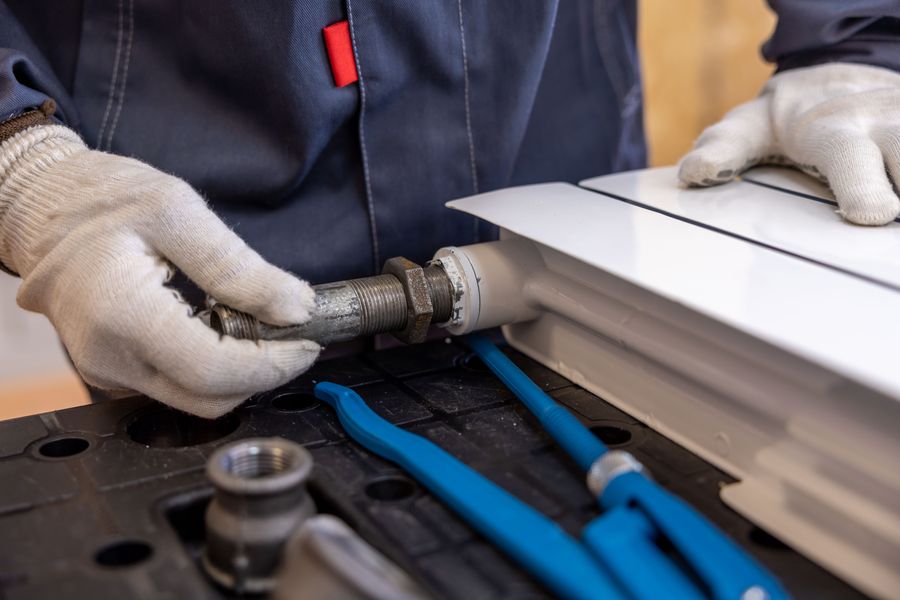
Pipework fails in patterns. Copper develops pinholes where water chemistry and velocity have thinned the wall; galvanised steel closes up internally with corrosion long before it leaks; older plastics become brittle at fittings. Recognising the pattern matters, because a pipe that has failed once through age will usually fail again nearby.
The practical decision on most jobs is between a targeted section repair and replacing the run. That decision rests on the pipe's material and age, how many failures have already occurred, how accessible the run is, and whether flow and pressure are already degraded.
Symptoms
Signs this is the right service
- Discoloured water at first draw, particularly from one part of the building
- Pressure that has fallen gradually over years rather than suddenly
- More than one pinhole leak on the same run
- Visible green or white corrosion products at joints
- Hammering or vibration in the pipes when a tap or valve closes
What the work covers
Methods and scope
Which method applies depends on what the system is doing, the materials involved and the condition of the pipework.
- Section repair
- A failed length is cut out and replaced with new pipe and fittings. Appropriate where the surrounding pipework is sound and the failure has a specific cause such as mechanical damage or a single bad joint.
- Joint and fitting replacement
- Many leaks are at connections rather than in the pipe wall, including compression fittings, threaded joints and valves. Replacing the fitting and remaking the joint resolves these without disturbing the run.
- Repiping a run or a building
- Where corrosion or repeated failures affect a whole distribution system, replacing the run in a modern material restores flow and removes the recurring cost of individual repairs.
- Pressure and flow diagnosis
- Low pressure can come from a partly closed valve, a failed pressure regulator, blocked aerators, corroded pipe bore, or a supply-side issue. Each is tested rather than assumed.
Process
How the work is sequenced
Identify the material and age
Copper, galvanised steel, PEX and CPVC fail in different ways and are repaired with different methods and fittings.
Map the affected run
Establishing which fixtures share the run shows whether the symptom is local or system-wide.
Measure before deciding
Static and flowing pressure readings separate a pipe problem from a valve, regulator or supply problem.
Repair or replace
A single sound-pipe failure is repaired; a run with a failure history is quoted as a replacement so the same work is not repeated.
Pressure test and reinstate
New work is tested before enclosure, and the affected surfaces are left ready for finishing.
Questions